
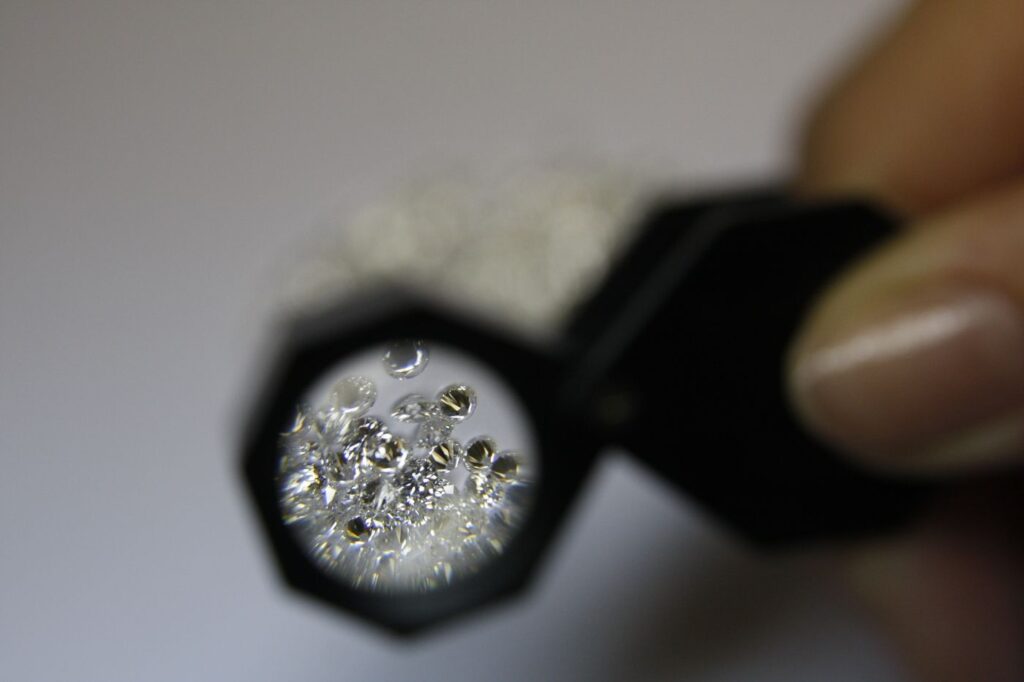
Stand a lab-grown diamond next to a natural one of the same cut, colour and clarity and you will not see a difference. Neither will most jewelers without laboratory equipment. Yet one can cost several times the other, and they behave very differently once you try to sell them. If you are choosing an engagement ring or a significant piece of jewelry, the real question is not which one is “better” but which one fits what you want from it. This guide compares lab-grown and natural diamonds on the three things that matter most to buyers: price, quality and resale value.
What Is a Lab-Grown Diamond?
A lab-grown diamond is real diamond: pure carbon arranged in the same cubic crystal structure, with the same hardness, refractive index and chemical composition as a mined stone. It is not a simulant like cubic zirconia or moissanite, which are different materials that only look similar.
Lab-grown diamonds are made in two main ways:
- HPHT (high pressure, high temperature) recreates the crushing pressure and heat of the Earth’s mantle to crystallise carbon around a small diamond seed.
- CVD (chemical vapour deposition) grows diamond layer by layer from a carbon rich gas in a vacuum chamber, onto a thin diamond seed plate.
In the United States, the Federal Trade Commission revised its Jewelry Guides in 2018 and no longer defines a diamond as only a natural stone. Sellers must, however, clearly qualify a lab-grown stone with terms such as “laboratory-grown”, “laboratory-created” or “[manufacturer name]-created”. That rule protects buyers on both sides: you should always know which one you are paying for.
Price: The Biggest Difference
Lab-grown diamonds cost far less than natural diamonds with the same specifications, and the gap has widened year after year as production capacity has grown. A few years ago a lab-grown stone might sell at a discount of 30% to 40% to a comparable natural one. Today it is common to see lab-grown diamonds priced at a small fraction of a natural stone of the same carat weight, colour and clarity, with discounts of 80% or more at many retailers.
In practice this means a budget that buys a one carat natural diamond can often buy a two or three carat lab-grown stone of higher colour and clarity. That is the main reason lab-grown diamonds now account for a large share of engagement ring sales in the US.
Natural diamond prices have also fallen from their peak in 2022, but far less dramatically. Natural stones are limited by what mines produce and by the cost of finding and extracting them, which keeps a floor under prices that lab-grown production does not have.
Quality: Identical to the Eye, Different Under the Microscope
Lab-grown diamonds are graded on the same 4Cs as natural ones: cut, colour, clarity and carat. Quality varies in both categories, from poor to exceptional, so a lab-grown diamond is not automatically flawless and a natural diamond is not automatically superior.
A few practical differences are worth knowing:
- Inclusions. Natural diamonds contain tiny crystals and feathers formed in the Earth. Lab-grown stones can show metallic flux inclusions (HPHT) or growth lines (CVD). Gemological labs use these and other features to tell them apart.
- Treatments. Some CVD diamonds are treated after growth to improve colour. Reputable sellers disclose this, and a grading report should mention it.
- Grading reports. Both types can come with reports from independent laboratories such as IGI and GIA. A lab-grown report is clearly marked as such, and the stone is usually laser inscribed on the girdle.
- Durability. Both score 10 on the Mohs hardness scale. Daily wear, cleaning and care are exactly the same.
Whichever you choose, the cut has the biggest effect on how much a diamond sparkles. A well cut lab-grown stone will outshine a poorly cut natural one, and vice versa.
Resale Value: Where the Difference Is Stark
This is the point many buyers do not consider until later. Diamonds of any kind are not a liquid investment, and even natural diamonds typically resell for well below their retail price. Selling to a jeweler, a diamond buyer or at auction, the owner of a natural stone might recover roughly 20% to 50% of what they paid, depending on the stone, the market and the buyer.
Lab-grown diamonds have very little resale value. Because they can be produced in growing quantities and their prices keep falling, many jewelers and buyers will not purchase them at all, and those that do offer a small amount. Some retailers offer trade-in or upgrade programmes for lab-grown stones bought from them, which is worth checking before you buy.
If you think you might want to sell the ring one day, it helps to understand the process first. Our guide on whether to sell an old engagement ring covers what to expect.
Ethics and Environment
Lab-grown diamonds are often marketed as the ethical choice, since they avoid mining and have a traceable origin. That is a real advantage for many buyers. The environmental picture is more mixed: growing diamonds takes a great deal of energy, so the footprint depends largely on the power source used by the producer. Natural diamonds, for their part, can be traced through programmes that document their origin, and the Kimberley Process aims to keep conflict diamonds out of the supply chain. If this matters to you, ask the seller for specific information rather than relying on general claims.
Which Should You Choose?
Choose lab-grown if you want the biggest, whitest and cleanest diamond your budget allows, you plan to keep the ring for life, and resale value is not a concern.
Choose natural if rarity and the story of a stone formed over millions of years matter to you, you want the option to sell or pass it on with some value, or you are buying a larger, high quality stone where long term value is part of the decision.
Many couples also split the difference with a natural centre stone and lab-grown side stones, or the other way around. For a deeper look at whether a lab-grown diamond makes sense as a purchase, see lab-grown diamonds: worth the investment?
Quick Summary
Lab-grown and natural diamonds are physically the same material and look identical to the eye. Lab-grown costs a fraction of the price and lets you buy a bigger or better stone, but it has little to no resale value. Natural diamonds cost much more and are rarer, and they keep part of their value. Always buy with an independent grading report and make sure the stone is clearly identified as lab-grown or natural.