
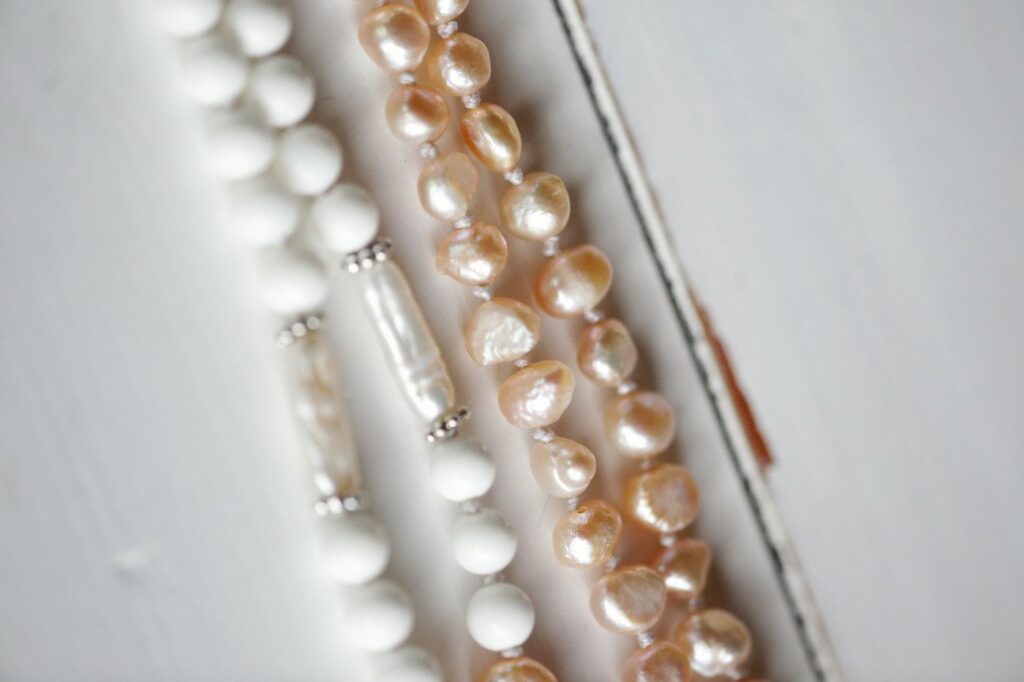
Pearls are the most delicate gems most people ever own. They are organic, grown inside a living mollusc, and their beauty comes from thin layers of nacre that can be dulled, scratched or dissolved far more easily than any mineral gemstone. The good news is that cleaning pearls is simple, as long as you know what to avoid. This guide explains how to clean pearls without damaging them, how to store them and when to take them to a professional.
Why Pearls Need Special Care
Pearl nacre is made mostly of calcium carbonate in the form of aragonite, held together by an organic protein called conchiolin. That structure gives pearls their glow, or lustre, but it also makes them vulnerable:
- They are soft. Pearls rate only about 2.5 to 4.5 on the Mohs hardness scale, so metal, gemstones and even grit in a cloth can scratch them.
- They react to acids. Calcium carbonate dissolves in acid, which is why vinegar and lemon juice are off limits, and why even sweat and some cosmetics slowly dull the surface.
- They are porous. Perfume, hairspray and lotions can be absorbed and discolour the nacre over time.
- They are strung on silk. Most quality necklaces are knotted on silk thread, which stretches, weakens and darkens when wet.
The Golden Rule: Last On, First Off
The single most effective way to keep pearls clean is to avoid getting them dirty. Put your pearls on after makeup, perfume and hairspray have dried, and take them off before you undress, exercise, cook, swim or shower. This habit alone prevents most of the build-up that later needs cleaning.
How to Clean Pearls After Every Wear
Routine cleaning takes less than a minute:
- Take a soft, lint-free cloth, such as a microfibre or a clean chamois.
- Gently wipe each pearl to remove skin oils, sweat and traces of cosmetics.
- For a necklace, work along the strand pearl by pearl rather than rubbing the whole string at once.
- Store the pearls straight away, flat and apart from other jewellery.
Doing this every time you wear them is the best protection for lustre, because body oils and acids are removed before they have time to act on the nacre.
How to Deep Clean Pearls Safely
If your pearls look dull or grimy, a gentle wash is safe when done carefully:
- Mix a few drops of mild, phosphate-free soap or gentle baby shampoo into a bowl of lukewarm water. Avoid detergents and dish soaps with degreasers or lemon additives.
- Dip a soft cloth or a very soft make-up brush into the soapy water and squeeze out most of the liquid. The cloth should be damp, not dripping.
- Wipe each pearl gently, paying attention to the area around the drill holes where dirt collects.
- Wipe again with a cloth dampened with plain clean water to remove any soap residue.
- Lay the pearls flat on a dry, soft towel to air dry completely before storing or wearing them.
Never soak a pearl necklace or bracelet. Water can get into the drill holes and the silk thread, and a wet silk thread stretches if you hang it up to dry. Allow at least several hours, ideally overnight, for the thread to dry completely.
What Never to Use on Pearls
- Vinegar, lemon juice or any acid: they etch the nacre and destroy the lustre.
- Ammonia and bleach: common in household jewellery cleaners, and harmful to nacre and silk.
- Ultrasonic cleaners: vibrations can crack nacre, loosen coatings and damage the drill holes.
- Steam cleaners: heat and pressure can crack pearls and dry out the nacre.
- Toothpaste, baking soda and polishing cloths impregnated with chemicals: all are abrasive or chemically active.
- Silver dips: if your pearls are set in silver, clean the metal carefully without letting the dip touch the pearls. Our guide on how to clean silver jewelry at home covers safe methods for the metal.
How to Store Pearls
Storage matters as much as cleaning:
- Keep pearls in a soft pouch or a separate fabric-lined compartment, away from harder gems and metal that can scratch them.
- Store necklaces flat rather than hanging, so the thread does not stretch.
- Avoid sealing pearls in airtight plastic bags for long periods. They benefit from a little moisture in the air and can become dry and brittle in very dry conditions.
- Keep them away from direct sunlight and heat sources, which can fade and dry the nacre.
Wear Your Pearls
It may sound surprising, but pearls that are worn regularly often look better than pearls kept locked away, because gentle handling and the natural humidity of skin help keep them from drying out. The key is to wear them with care and wipe them after each use.
When to Take Pearls to a Jeweller
Some jobs are best left to a professional:
- Restringing: silk thread weakens over time. If you wear a strand often, have it checked every year or so and restrung when the thread looks stretched, discoloured or loose between the knots. Knots between each pearl stop them rubbing together and mean you lose only one pearl if the strand breaks.
- Loose settings: pearls in rings and earrings are usually glued onto a peg. If one wobbles, stop wearing it until a jeweller re-sets it.
- Visible damage: chips, cracks, peeling nacre or a chalky surface need professional assessment.
Cleaning Different Types of Pearls
The same gentle method works for Akoya, freshwater, South Sea and Tahitian pearls. Freshwater pearls often have thicker nacre and are a little more forgiving, while Akoya pearls can have thinner nacre that wears through with harsh treatment. Imitation pearls, such as glass beads with a pearly coating, should also be cleaned only with a damp cloth, because the coating can peel with chemicals or scrubbing.
Quick Pearl Care Checklist
- Put pearls on last and take them off first.
- Wipe with a soft cloth after every wear.
- Deep clean with a damp cloth and mild soap, never soak.
- Dry flat, then store flat and separately.
- No acids, ammonia, ultrasonic or steam cleaners.
- Have strands restrung when the thread weakens.
With these simple habits, a strand of pearls can keep its glow for generations. For your other pieces, see our guides on how to clean a diamond ring at home and caring for gold jewelry.