
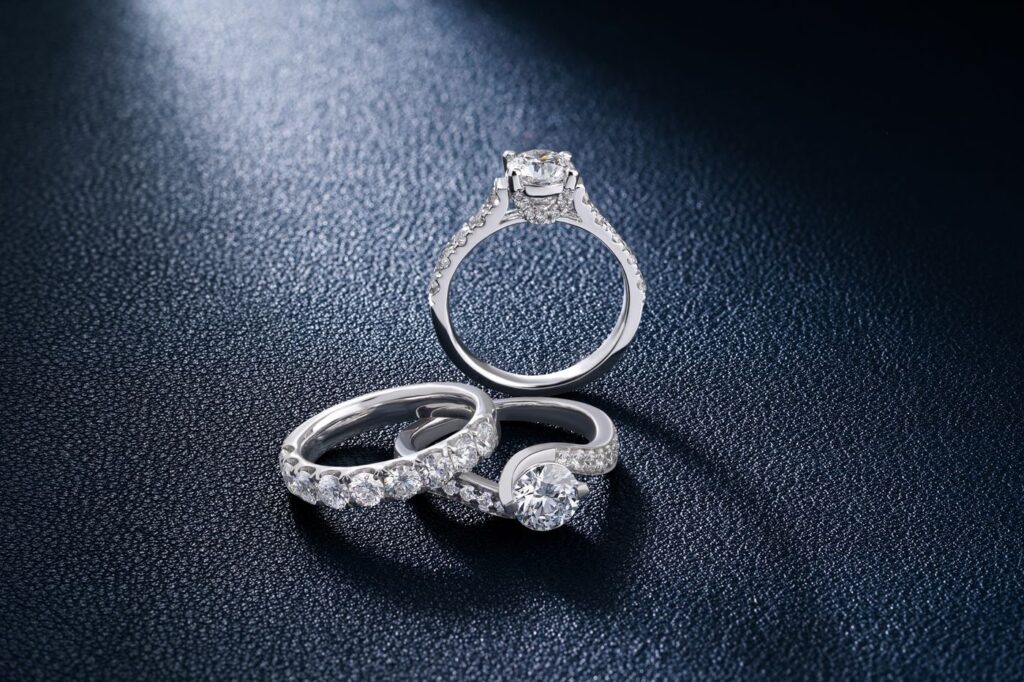
A diamond that has lost its sparkle has almost never lost anything at all. Diamonds are lipophilic, which means they attract oil and grease, and a ring worn every day collects a film of skin oil, hand cream, soap and dust within days. That film sits on the back of the stone, where light is supposed to enter and bounce back out, and it turns a bright stone grey and glassy. Cleaning a diamond ring at home is quick, cheap and safe if you use the right method for the ring you actually have. Here is how to do it, and what to avoid.
Why Your Diamond Looks Dull
A well cut diamond works like a system of mirrors. Light enters through the top, reflects off the angled facets on the underside (the pavilion) and returns through the top as brilliance and fire. When the pavilion is coated with grime, light leaks out of the bottom instead of reflecting back. That is why the most important part of cleaning is not the top of the stone you can see, but the underside you cannot. On most rings the underside is reached through the gallery, the open metal work below the stone, which is exactly where lotion and soap collect.
What You Need
- A small bowl of warm water, not hot
- A few drops of mild dish soap without moisturisers or bleach
- A new, very soft toothbrush or a baby toothbrush
- A lint free cloth or microfibre cloth
- A sink stopper or a strainer, so nothing disappears down the drain
Step by Step: The Everyday Method
- Soak. Mix a few drops of dish soap into the warm water and leave the ring in it for 20 to 30 minutes. This loosens oil and dried soap.
- Brush. Lift the ring out and brush gently, working the bristles under the stone from the side and the back. Brush around the prongs and along the shank, where residue builds up in the corners.
- Rinse. Rinse in clean warm water, with the plug in or over a bowl.
- Dry. Pat dry with a lint free cloth. Avoid paper towels and tissues, which can leave fibres caught on the prongs.
This is the same basic method most jewelers recommend for home care, and it is safe for diamonds set in platinum, white gold, yellow gold and rose gold. If you wear the ring daily, a quick soak once a week keeps it bright.
For Heavier Build Up
If the ring has been neglected for months, repeat the soak and brush once or twice. For stubborn residue, some jewelers suggest a brief dip in a solution of warm water and a small amount of household ammonia (about one part ammonia to six parts water) before brushing. Use it only on a solid gold or platinum ring set with diamonds alone, keep the dip short, rinse thoroughly and do it in a ventilated room. Never use ammonia on rings with pearls, opals, emeralds, turquoise or any coated or treated stones.
What Not to Do
- Chlorine bleach. Chlorine attacks the alloys in gold and can weaken prongs over time, even at the concentrations found in pools and hot tubs. Take your ring off before swimming.
- Abrasives. Toothpaste, baking soda and scouring powders do not harm the diamond, which is the hardest natural material, but they scratch the metal around it and dull a polished finish.
- Sharp tools. Pins and needles can scratch metal and loosen settings. If something is truly stuck under the stone, leave it for a jeweler.
- Boiling water or sudden temperature changes on rings with other gemstones, which can crack some stones.
Are Ultrasonic Cleaners Safe for Diamonds?
Home ultrasonic cleaners use high frequency vibration to shake dirt loose, and they do an excellent job on a solid diamond ring in good condition. They are not safe for every ring:
- Fracture filled or clarity enhanced diamonds can be damaged, because the vibration and heat can affect the filling material.
- Diamonds with large feathers or inclusions that reach the surface can, in rare cases, be weakened.
- Rings with loose stones may lose them in the tank, since vibration finds any weakness in a setting.
- Rings with other gems, such as emeralds, opals, pearls and tanzanite, should not go in an ultrasonic at all.
- Pavé and micro pavé settings, with many tiny stones held by small beads of metal, are more likely to lose a stone.
If your diamond came with a grading report, it will note if the stone is clarity enhanced. If you are not sure, stick to the soap and water method.
Check the Setting While You Clean
Cleaning is the best moment to check that your diamond is secure. Hold the ring close to your ear and tap it gently with a fingernail: a rattle means a loose stone. Look at each prong under good light. Prongs wear thin with daily wear, especially on the palm side of the hand, and a prong that is flattened, bent or catching on fabric needs attention before it lets go. A jeweler can retip or rebuild a prong for much less than the cost of replacing a lost diamond.
How Often to Clean and When to See a Jeweler
For a ring worn daily, a weekly or fortnightly soak at home keeps it sparkling. Book a professional clean and inspection about every six months. A jeweler can steam clean the ring, check every prong under magnification and polish out surface scratches in the metal. Many jewelers do this for free for customers who bought the ring from them.
Everyday Habits That Keep It Clean Longer
- Put your ring on after hand cream, sunscreen and perfume, not before.
- Take it off to knead dough, garden, clean with chemicals, go to the gym or swim.
- Hold the ring by the band, not the stone, when you take it off. Touching the diamond leaves oil on it straight away.
- Store it on its own in a soft pouch or a separate compartment, since a diamond can scratch other jewelry and other diamonds.
If your ring is set in yellow or rose gold, the same care keeps the metal glowing too. Our guide to cleaning jewelry with vinegar explains when vinegar helps and which stones and finishes it can harm, and if you are still choosing a stone, what to consider before buying a diamond ring is a good place to start.
Quick Summary
Soak in warm water with mild dish soap for 20 to 30 minutes, brush underneath the stone with a soft toothbrush, rinse and dry with a lint free cloth. Avoid bleach, abrasives and ultrasonic cleaners on treated stones or delicate settings, and check the prongs every time you clean.